

<b>JAKARTA</b> — The Ministry of Communication and Digital (Kemen Komdigi) has officially shifted its policy direction and national internet access equity strategy, no longer relying solely on the construction of Base Transceiver Station (BTS) towers. Moving forward, digital connectivity development across Indonesia will combine various technological solutions tailored to regional characteristics.
Digital Infrastructure Paradigm Shift
This strategic step was taken to ensure that equal access to communications can proceed more efficiently, in a targeted manner, and adaptively regarding the geographical challenges of the archipelago. The Ministry of Communication and Digital considers a uniform approach through BTS construction no longer fully adequate to reach all remote regions with varying topographies.
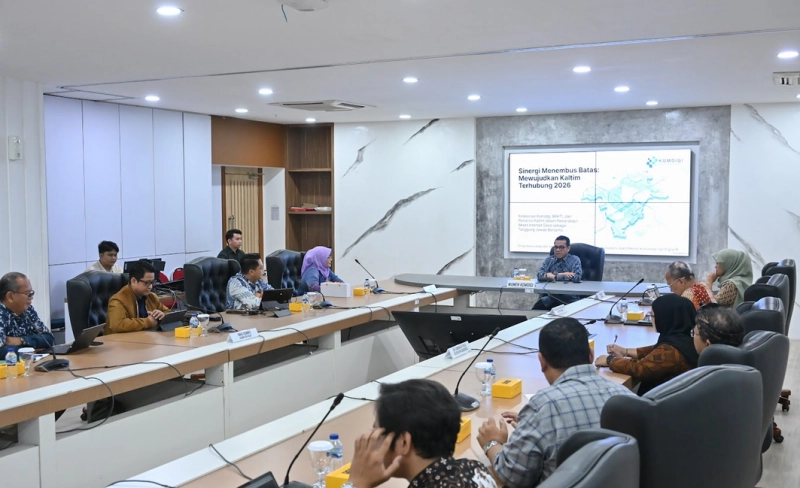
Deputy Minister of Communication and Digital (Wamen Komdigi) Nezar Patria conveyed this paradigm shift during an audience with officials from the East Kalimantan Provincial Communication and Information Department (Diskominfo) at the Ministry of Communication and Digital Office in Jakarta on Tuesday (4/8/2026).
"Moving forward, connectivity development will be tailored to geographical conditions, population size, and the needs of each region through the use of various technologies," Nezar Patria said.
Multi-Technology Combination Based on Region
Under this new approach, internet access provision will not rely solely on terrestrial broadcast towers, but will integrate fiber optic cable networks, BTS, and satellite technology. Determining which technology option to deploy will be based on comprehensive mapping of population size, topographic terrain conditions, and data usage needs in the area.
For urban areas or densely populated settlements with accessible terrain, network strengthening will prioritize fiber optics and BTS. Conversely, for remote, border, and island regions, as well as areas facing severe geographical challenges, internet access will leverage satellite technology to accelerate signal penetration without being hampered by physical tower construction constraints.
Central and Regional Synergy
The audience meeting with the East Kalimantan Provincial Diskominfo served as a catalyst for coordination in mapping real needs at the regional level. East Kalimantan, which encompasses urban areas as well as vast hinterlands, serves as an example of a region requiring connectivity management based on this multi-technology approach.
Through this policy reorientation, the government is optimistic that the acceleration of national digital transformation can proceed more evenly and inclusively. This step is expected to significantly narrow the digital divide between regions and ensure that all segments of society across the country gain access to reliable connectivity.
Reference source:Pintoe – Komdigi Ubah Strategi Pemerataan Internet, Tak Lagi Bergantung pada BTS
Read this article in Bahasa Indonesia.