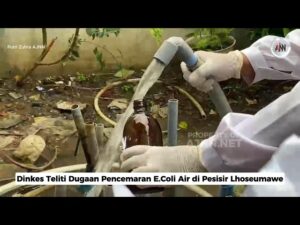

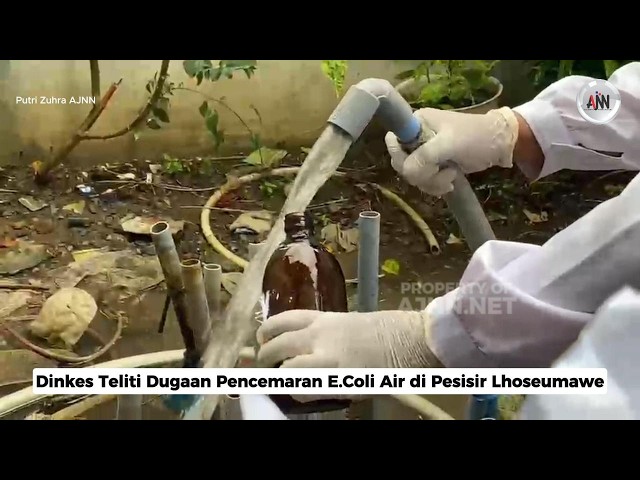
LHOKSEUMAWE — The Lhokseumawe City Health Agency is stepping up research and laboratory testing of water samples in local coastal areas following alleged Escherichia coli (E. coli) contamination. This rapid response measure was taken to ensure the environmental quality of coastal waters and protect the safety and health of communities living along Lhokseumawe's coastline.
Investigation into Coastal Water Contamination
The water quality inspection includes periodic sampling at several vulnerable spots along the coast. A technical team from the Health Agency was deployed directly to the site to collect samples of seawater and surface water around residential areas to test for pathogens and measure contamination levels.
The suspected E. coli contamination along Lhokseumawe's coastal area has drawn serious concern from the local government. Coastal waters have long been used by local residents for daily activities, fishing, and supporting the local economy. This in-depth study is expected to identify the primary source of contamination, whether from domestic waste discharge, poor residential sanitation systems, or other environmental factors.
Risks and Impact of Bacterial Exposure
The presence of Escherichia coli in water sources serves as a key biological indicator of fecal contamination. If water contaminated with high concentrations of these bacteria is consumed or comes into direct contact with the human body, the risk of environmental health issues increases significantly.
Exposure to E. coli-contaminated water can trigger various clinical symptoms of digestive tract infections, including severe diarrhea, abdominal cramps, nausea, vomiting, and dehydration. The health risks become far more fatal if they affect vulnerable groups, including children, toddlers, and the elderly living near the coastal area.
Preventive Measures and Health Surveillance
As laboratory testing of Lhokseumawe's coastal water samples continues, the Health Agency urges all coastal residents to remain vigilant and adopt clean and healthy living behaviors (PHBS). Residents are asked to be more diligent in ensuring the cleanliness of water used for daily food and beverage consumption.
Additionally, organizing sanitation facilities and improving household waste disposal systems along the beach area are key priorities that require collective action. The laboratory water test results will serve as an official reference for relevant agencies to formulate sustainable measures to prevent and mitigate coastal water pollution in Lhokseumawe City.
Reference source: Ajnn – Dinkes Teliti Dugaan Pencemaran E.Coli Air di Pesisir Lhoseumawe
Read this article in Bahasa Indonesia.